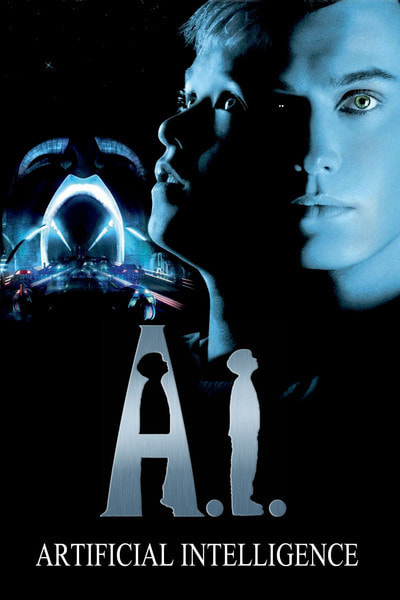
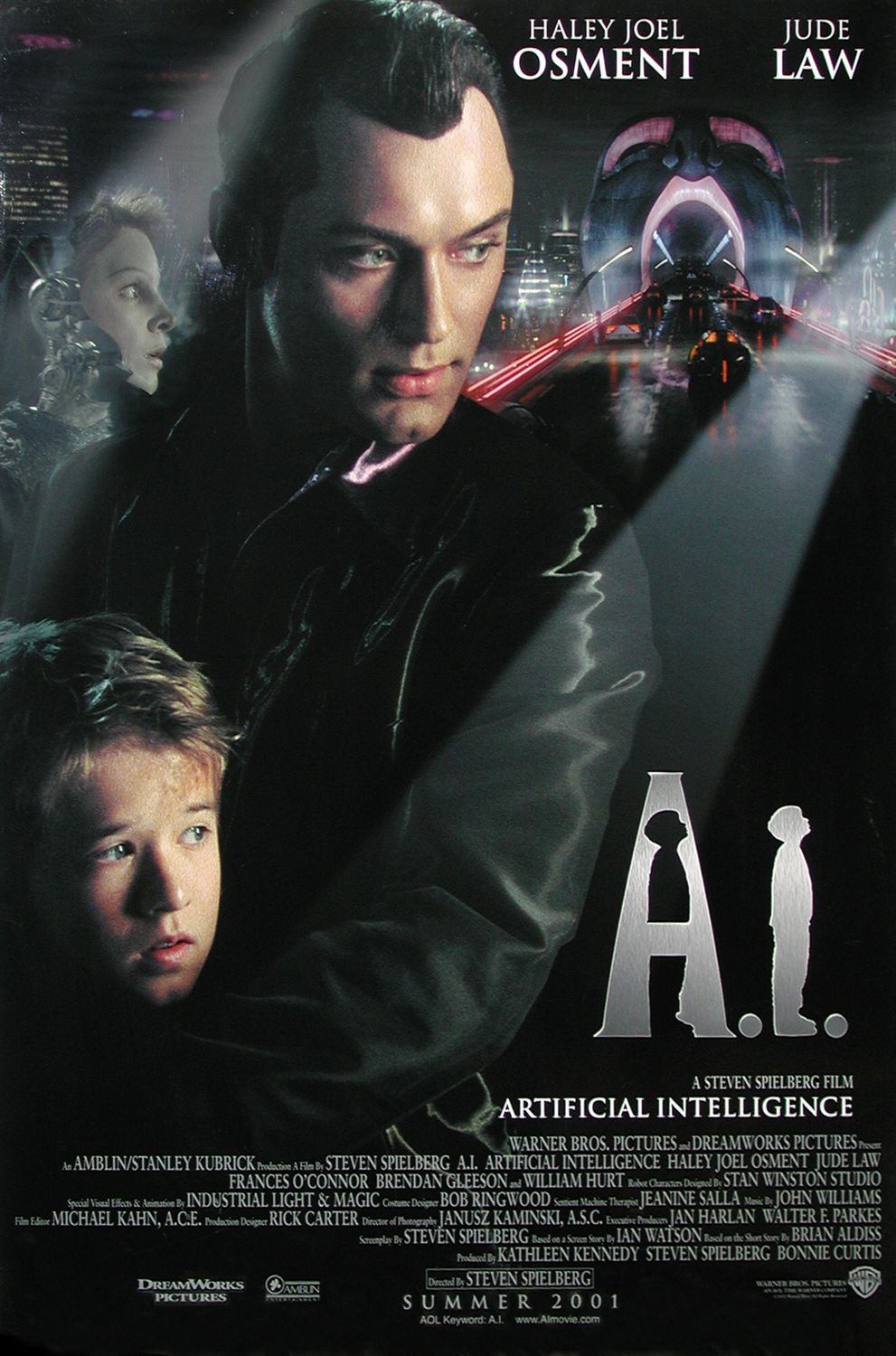
 | I’ve watched A.I. Artificial Intelligence many times since it came out in 2001. I first saw it in a theater on opening day with my sister and my late friend Tom Miller. We all loved it. I’ve never stopped loving it. I watched it again last evening, and if anything I love it more than ever. And with more than love: great admiration. What a gift Stephen Spielberg has given us here, and what a great tribute to his friend and mentor Stanley Kubrick. Some early reviews complained of an uneasy blend of Spielberg and Kubrick. I find it a perfect wedding of their talents. I always wait through the end credits to see Spielberg’s dedication of the movie to the master. Also, if you are as moved by this movie as I am, you need that time to reflect and wind down. |
I recall early critics’ complaints about the “fairy tale happy ending.” Did they see the same movie I did? Obviously not. 2000 years after her death a mother is brought back to life from a trace of DNA, but she can live for only one day. When she goes to sleep that night she will never awaken again and will never be able to be revived again. Her robotic foster son, created to give her “unconditional love,” dies at her side. Happy ending? Well, I guess definitions of that might vary.
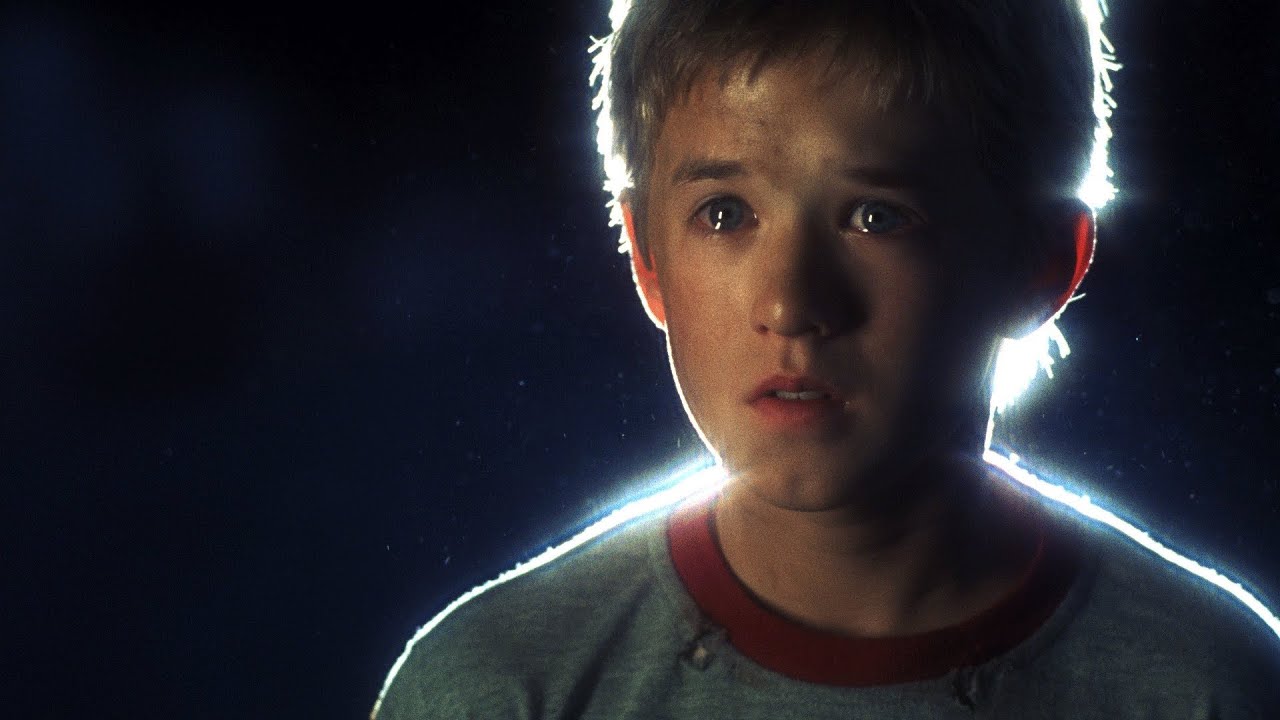
The robotic child is played by Haley Joel Osment, who had already made an impression in Forrest Gump (1994) and The Sixth Sense (1999). With those two credits he would go down in film history as one of the finest very young actors ever. In A.I. he truly nails down that reputation. His entrance, as a robot child not yet programmed to love, is breath-taking. How he feels that carpet beneath his feet and the wood of the floor as he steps down. And later, how his face blooms when his human mother figure programs him with the seven words that will cause him to love her unconditionally forever. For me one of the great moments in movie history.
Of course Spielberg has always been a master of working with children. Think of the child seated with his father at table in Jaws. Cary Guffey especially but also the other kids in Close Encounters of the Third Kind. All the children in E.T. Christian Bale in Empire of the Sun. Ke Huy Quan in Indiana Jones and the Temple of Doom. The kids in War of the Worlds. I’d even add Shia Lebeouf in Indiana Jones and the Kingdom of the Crystal Skull, although it is fashionable now to dismiss both the young actor and the movie (I don’t dismiss either).
Of course Spielberg has always been a master of working with children. Think of the child seated with his father at table in Jaws. Cary Guffey especially but also the other kids in Close Encounters of the Third Kind. All the children in E.T. Christian Bale in Empire of the Sun. Ke Huy Quan in Indiana Jones and the Temple of Doom. The kids in War of the Worlds. I’d even add Shia Lebeouf in Indiana Jones and the Kingdom of the Crystal Skull, although it is fashionable now to dismiss both the young actor and the movie (I don’t dismiss either).
| Fairy tale. Yes, it does have that quality. The narration sounds much like a tale being told to children. If you get stuck on that level you are missing the point. A central reference of the movie is Pinocchio. The basic plot of the movie is a robot child trying to find the Blue Fairy to make him into a “real boy.” He finds her, twice, the second voiced by Meryl Streep. Just as | 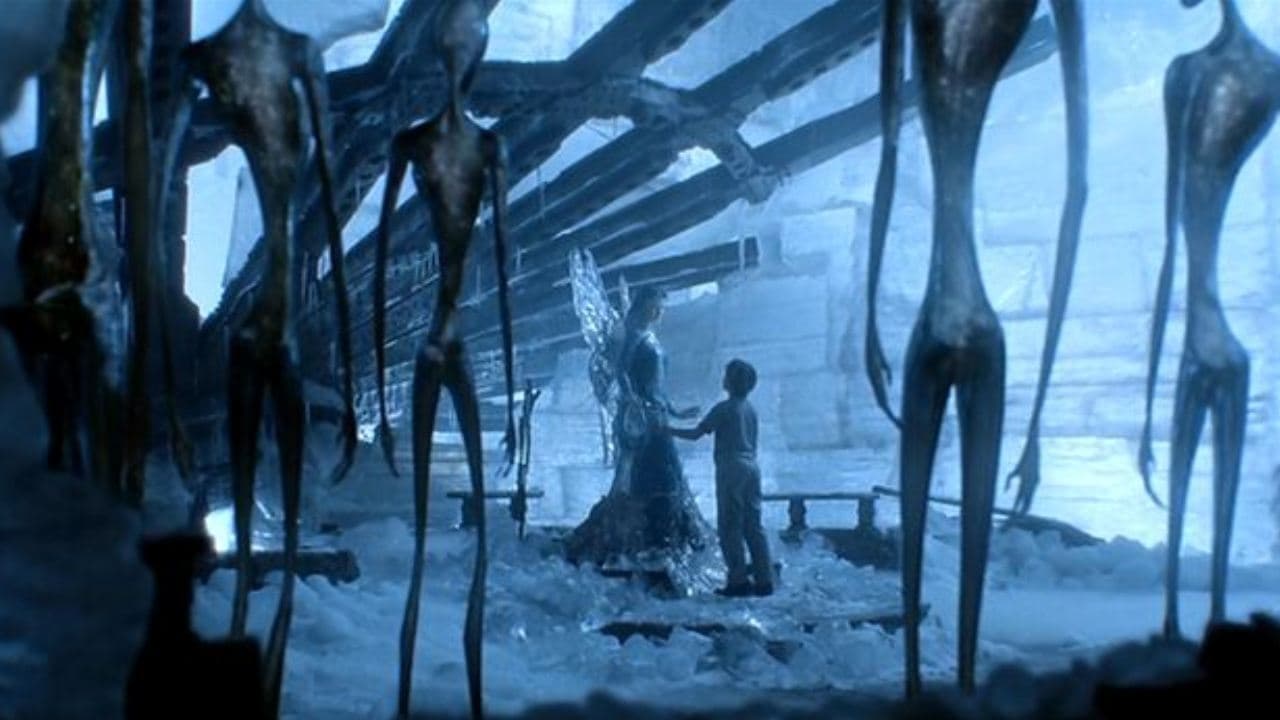 |
central is Frankenstein, or The Modern Prometheus. Not the movie versions but Mary Shelley’s novel. This movie and her novel share a major question: What is the responsibility of a creator toward that which is created? This might be the major question of the last several centuries. Most recently it also turned up in Oppenheim.
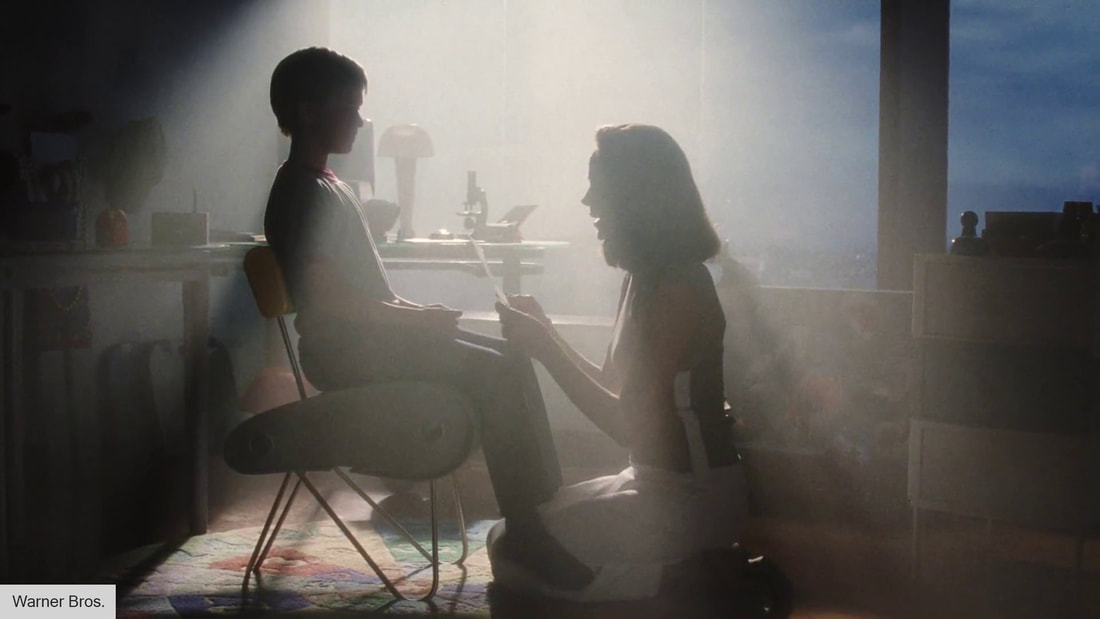 | Recall that in the novel the creation is not a monster. He is an intelligent and thoughtful man abandoned by his creator and rejected by society because of his appearance. If David, the robotic child, is the creation, perhaps we have two creators here. One, Alan Hobby (great choice of last name) who has the goal of creating an artificial human with the capability |
of loving and dreaming and such human traits. Played by William Hurt, he is not evil, and his motivations are positive. Think Victor Frankenstein. More directly the creator is the mother, Monica Swinton, played by Frances O’Connor. It is she who makes the ultimate decision to program the robotic child with unconditional love for her. It is she who, like Victor Frankenstein, casts her creation away.
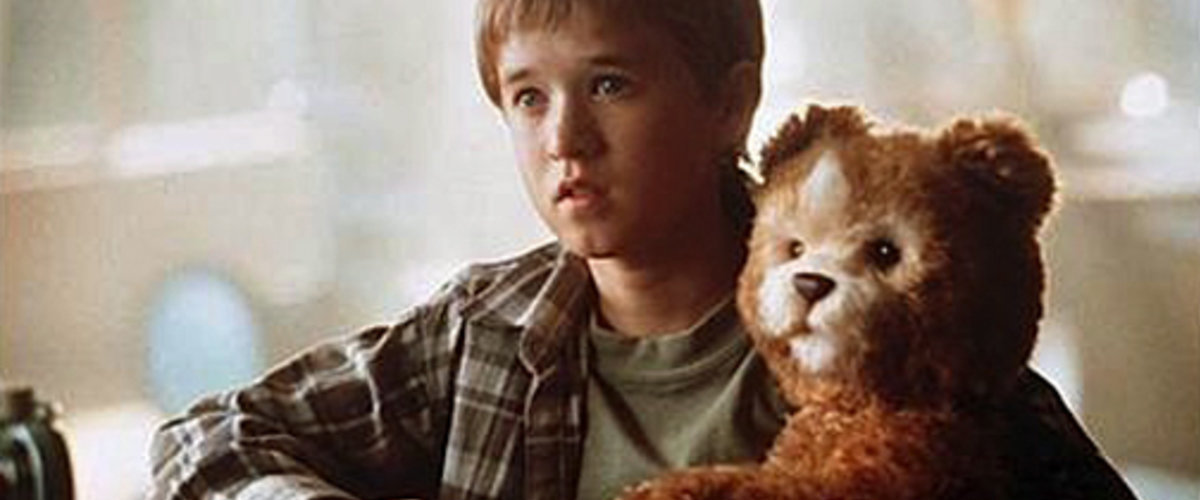
Unconditional love. It is Teddy, the “smart toy” bear, who says at the end of the penultimate act of the movie that he and David are in a cage. That cage in this case is unconditional love, a program in David that cannot be altered or erased, so strong that the only cure for it is for the artificial being to be returned to the factory to be destroyed.
The mobs in Shelley’s novel are echoed by the kids at a birthday party, by the mother’s husband (Sam Robards), and most especially by the crowd at the Flesh Fair, where robots in the wild have been rounded up to be destroyed in hideously graphic ways by humans for the enjoyment of the onlookers.
The mobs in Shelley’s novel are echoed by the kids at a birthday party, by the mother’s husband (Sam Robards), and most especially by the crowd at the Flesh Fair, where robots in the wild have been rounded up to be destroyed in hideously graphic ways by humans for the enjoyment of the onlookers.
| Pinocchio has his Talking Cricket (Jimminy in the Disney movie). David has his Gigolo Joe (Jude Law), whom he meets after his abandonment. Joe is an artificial human male prostitute who can please the ladies better than any human lover can, as he tells us more than once. One falls in love with Joe, just as the | 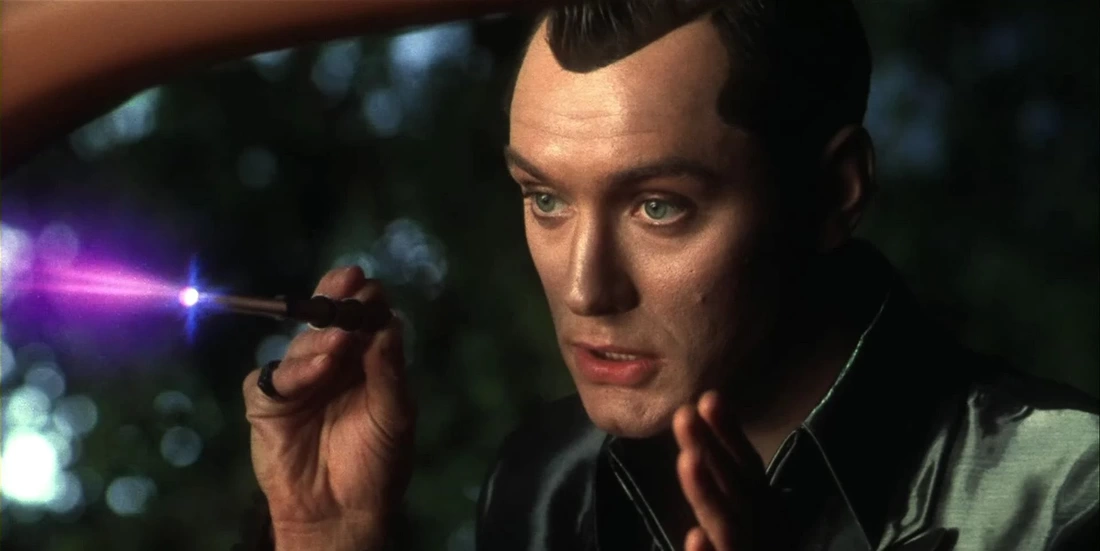 |
ladies would, and one of the accomplishments of the movie is how this relationship between such and an innocent “boy” never becomes creepy. Law’s performance is wonderful, and I love his movement, both when he is dancing and when he is simply walking. When he is finally captured for a crime he did not commit (but he is guilty of being robot) and is pulled into the air away from David his last words, “I am” followed by “I was’ might just break your heart.
| At one point Joe tells David that humans hate us because they made us to serve them and now we outnumber them and are likely to outlast them. They do. Between the last two acts of the movie 2,000 years pass. Humans are no more, now replaced by tall and graceful humanoid but not human-looking artificial beings. The creators have died, the creations | 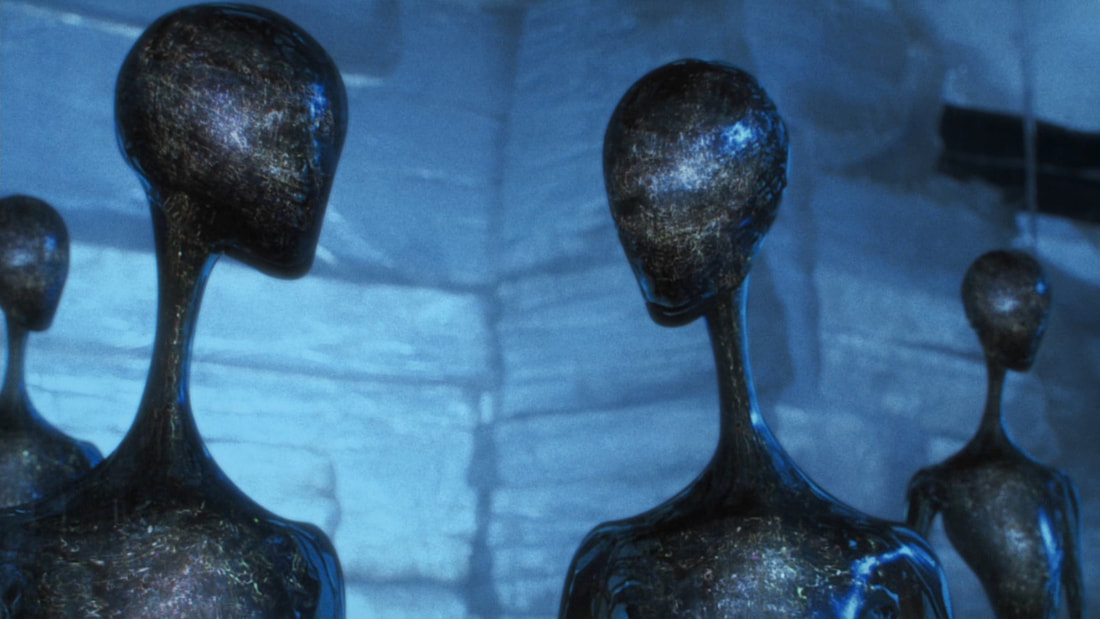 |
have continued to evolve. It is they who make possible the final act in the tale of David and the mother he loves. They had wanted to keep David “alive,” for he is the only one left who had actually ever known the human creator. Well, that’s not quite accurate, for at the very end we do see the sorrowing Teddy climb up on the bed to view the dead mother and child.
This last viewing of the movie was from a recording I had made from a recent freebie weekend on DirecTV that included the MGM channels. I have the DVD, or course, the excellent Blu-ray edition. I was curious how it looked on the streaming channel. Excellent actually. But I have one major quibble. When David and Gigolo Joe are zooming across the magnificent bridge on the way to Rouge City, the waltz from “Der Rosenkavalier” comes booming out (tribute, I’d say to Kubrick’s use of “The Blue Danube” in 2001), the sound had been muted. You can recognize it, but it did not have the impact.
If you wish to see it, you can find it on MGM+ and Paramount+ or you can rent it from a number of sources. I continue to think A.I. is one of Spielberg’s best movies, up at the top along with Empire of the Sun.
This last viewing of the movie was from a recording I had made from a recent freebie weekend on DirecTV that included the MGM channels. I have the DVD, or course, the excellent Blu-ray edition. I was curious how it looked on the streaming channel. Excellent actually. But I have one major quibble. When David and Gigolo Joe are zooming across the magnificent bridge on the way to Rouge City, the waltz from “Der Rosenkavalier” comes booming out (tribute, I’d say to Kubrick’s use of “The Blue Danube” in 2001), the sound had been muted. You can recognize it, but it did not have the impact.
If you wish to see it, you can find it on MGM+ and Paramount+ or you can rent it from a number of sources. I continue to think A.I. is one of Spielberg’s best movies, up at the top along with Empire of the Sun.
 RSS Feed